Friday, March 21, 2014

Economy: Buddhist Economics - What We Could Learn From Ancient Asian Wisdom


(Drivebycuriosity) - The University of California in Berkeley offers a class in "Buddhist Economics" (berkeley.edu). I think this is an interesting idea. Yes, Buddhism is a nontheistic religion and stands for incarnation, Karma and the infinity of everything. But there is a lot of ancient Asian wisdom in it. And Buddhists are not out of this world. 

Some Buddhist monasteries - especially the Shaolin - developed the art of martial self defense. They are now masters in martial art and they are making money with it. And Zen, a Chinese/Japanese version of Buddhism, practices to stay calm and being relaxed, which is helpful in every situation.

Karma refers to the principle of causality: What you do today, will shape your situation in the future, in this life or in another. I guess the idea of sustainable economics is connected with the Karma concept: Avoid wasting commodities and don´t pollute if you don´t want to destroy your future.

There are some companies who behave in a kind of Buddhist way. Amazon`s founder Jeff Bezos doesn`t care much about the now, he focuses on the future which might be years away. He doesn`t pursue short term profits and ignores the stock price, instead the company is investing into the satisfaction of their customers which should generate long term growth.

Google has a similar strategy. The company is investing in self-driving cars, Google glass and a lot other technologies which could play out in some years. Tesla, the producer of electric cars, and other companies do they same.

Stock market investors could also learn from the Buddhist. They could ignore the daily news and noise and focus on the long term. History shows the US stock market rises on average 7% annually, which creates a fortune for patient investors who can wait over decades.

Disclosure: I am an investor in Amazon.com


Thursday, March 20, 2014

Stock Market: China - Bloating The Pessimism Bubble

(Drivebycuriosity) - This morning China`s stock market dropped on a five years low. From its peak of around 3,400 points in summer 2009 the Shanghai Composite, a gauge for the Chinese stock market, had been falling around 40%.

The weakness is a reflection of the growing China pessimism bubble. For years the sentiment for China stocks has been bleak. China bears have been continuously banging the "China crash drum" even that the country grew around 7.5% annually so far. Recently the pessimists got some tailwind because the latest export number had a surprisingly sharp drop and production & retail sales grew less than expected, but the numbers may be blurred because of the weeklong Chinese New Years celebrations in February. Today Goldman Sachs bloated the pessimism bubble and cut its growth forecast for China to 7.3% from 7.6% (bloomberg).

I recon that stock market weakness and the gloomy calls are too shortsighted. The China pessimists focus on the current situation and ignore the still bright perspectives of the country. China is rapidly transforming from a agriculture system into a modern consumer economy like  the U.S. and Western Europe.

Last weekend Beijing announced that they will invest more than 1 trillion yuan ($162 billion) redeveloping shantytowns this year (bloomberg). This is a part of their program to boost urban population to support growth. Other measures aim to speed up the construction of railways, expressways and airports to support the rapid urbanization. Yesterday the Chinese government declared that they want to speed up construction projects and “accelerate preliminary work and construction on key investment projects with timely assignment of budgeted funds”. According to Bloomberg this could be a response to the recent cooling signals and an attempt to secure the official growth target of 7.5% for this year (bloomberg). All these steps belong to a wide-ranging reform program which was announced last autumn (driveby).

The recently announced measures - and the whole reform program - should bolster domestic growth and make the country less dependable from erratic export markets. And the recovery in Europe and the ongoing strength of the US economy should deliver some tailwinds. Thus I believe that the pessimism bubble could burst soon and give way to a rally of the stock market in Shanghai.

Wednesday, March 19, 2014

Movies: The Grand Budapest Hotel

(Drivebycuriosity) - Wes Anderson is a brand name. The movie director has a reputation for hilarious & entertaining independent films full of surprises like "Moonrise Kingdom", "The Royal Tenenbaum" and "The Life Aquatic with Steve Ziossu". I enjoyed his newest creation, "The Grand Budapest Hotel", which is now running in US cinema theaters, even more than the mentioned movies (imdb).

The film is set in a fictional European state in the 1930s. The plot (no spoilers here) focuses on the adventures of 2 people, a concierge and a lobby boy, both of a remote, mountainside hotel, the name giving "Grand Budapest Hotel" (you can find a synopsis - with spoilers here wikipedia). Anderson delivered again a hilarious kaleidoscope of funny and sometimes dramatical events and spices this with a lot of slap stick. Cinematographer Robert D. Yeoman illustrated the narrative roller coaster with amazing pictures, I especially indulged in the images of the fictive hotel, a beauty by herself.

Anderson collected again an impressive cast. I had a lot of fun to follow Ralph Fiennes, as concierge, and the newcomer Tony Revolori as lobby boy. I also enjoyed the appearance of the exquisite Saoirse Ronan and of Tilda Swinton, F. Murray Abraham, Bill Murray ( a standard in Anderson`s movies), Edward Norton, William Dafoe, Harvey Keitel, Jude Law and the rest of the team.

Congratulations. With "The Grand Budapest Hotel" Wes Anderson expanded his brand name as maker of alternative comedies and icon of the independent movie scene. Highly recommended!

Tuesday, March 18, 2014

Urbanism: Does New York City Need Higher Skyscrapers?

(Drivebycuriosity) - When you walk through New York City you can see a lot of construction sites. It looks like that new skyscrapers are popping up like mushrooms in autumn. There could come many more towers if a new proposal gets realized.

Nathan Newman, a New York lawyer, leads a campaign, called "More NYC" (huffingtonpost). He advocates a massive expansion of housing in New York City (slate). This would translate into more and higher residential skyscrapers.

In the east coast metropolis, as in the whole US, constructing, including the height of buildings, is regulated by zoning laws. Newman proposes a change of the existing zoning, called up-zoning. The city administration should permit the construction of higher buildings which would create a lot of new apartments. In return the city should charge an extra fee for the additional construction. The city also would earn income taxes, property taxes and sales taxes from all the new residents who will find a place in the new towers.

New York City could use the additional revenues to directly finance the construction of affordable housing units in other lower-cost areas of the city and to finance public services, writes Newman. A part of the additional city income could go to transit, educational and medical infrastructure in the City like buses, subways, schools and hospitals.

I believe that this is an interesting idea. And there is another advantage which I haven´t found in his proposal. As I had explained before more & higher skyscrapers would increase the supply of apartments in New York City and thus slow down the rise of the rents in the metropolis (driveby).

Rents are climbing because the demand for apartments is rising and New York City, especially Manhattan, has a limited supply of land. But skyscrapers offer a loophole. The higher they rise, the more apartments are available, without using more land. Another loophole is the use of the waste land which you still could find along East River and Hudson. Therefore building more and higher skyscrapers would create a lot of new rental places which should keep the rents at bay.

Monday, March 17, 2014

Friday, March 14, 2014

Culture: Street Art - What`s Going On In Lower Manhattan?


(Drivebycuriosity) - It seems New York City is a museum for street art, especially Lower Manhattan (East Village, Lower East Side, Soho). There is always something going on.


Almost on any day somewhere a  new mural or another incarnation of street art pops up. Often older artworks get substituted by newer images.


Here a collection of "newcomers". Let the pictures speak for themselves. Enjoy.

Thursday, March 13, 2014

Traveling: A Visit At An 18th-Century Plantation (Drayton Hall) at Charleston, South Carolina


(Drivebycuriosity) - Traveler, if you come to Charleston, South Carolina, you might visit Drayton Hall (nationalregister). This is the oldest unrestored plantation house in America open to the public. The mansion is an outstanding example of Palladian architecture ( a European style of architecture derived from and inspired by the designs of the Venetian architect Andrea Palladio (1508–1580)) in North America, writes Wikipedia (wikipedia).


The name giving Drayton family had made their fortune as sugar growers in the Caribbean and used their wealth to invest in South Carolina, starting in the 17th century. John Drayton bought the property in the late 1730s, built the house and commenced a rice plantation there. The Drayton Hall owners were slave holders and possessed up to 200 African slaves to run plantation and mansion. 

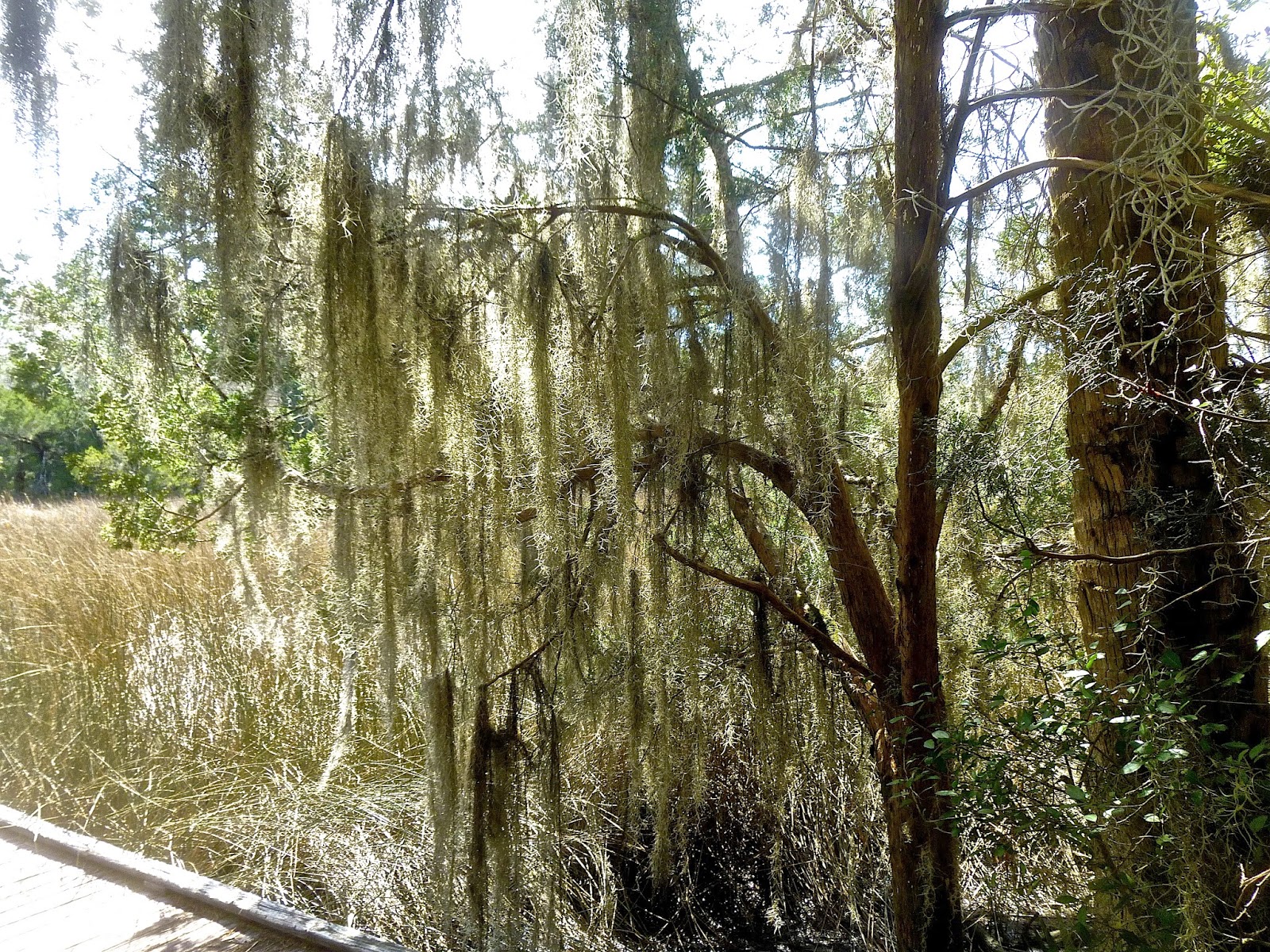
The end of the American Civil War (1865) ended slavery and the Drayton`s had to give up rise production which now needed expensive machines. In the late 20th century the sold plantation & mansion for a generous price to the National Tyrust, a privately funded nonprofit US organization. The former rice fields developed back into a swamp. Today the mansion is surrounded by an almost untouched forest, meadows, ponds and swamps.


Last week my wife and I paid $20 a head for admission to the former plantation and a guided tour through the house. This was a good investment. The very competent tour guide told us a lot about the history of the house and explained the architecture and the economics of the plantation. 


We also indulged walking through the surrounding meadows and forest, viewing ponds and swamp. I especially enjoyed spotting the high trees (partly oaks) which were covered with spanish moss.

 Drayton Hall offers a glance into the colonial history of the U.S. blended with the lush vegetation of Southern Carolina. 

Highly recommended!