Sunday, August 17, 2014

Contemporary Art: Living With Pop - A Reproduction of Capitalist Realism @ Artists Space, New York


(Drivebycuriosity) - Contemporary Art has many faces and roots. One of them is Pop Art which used articles of daily use and popular magazines and transformed them into art work. In the early 1960th a group of then young artists formed in Germany. They performed art shows and happenings and called their work "Capitaistic Realism", a reference to the changes in post war Germany and the rapid economical uspwings there (Wirtschaftswunder), which had let to a sharp rise in life standards. The artists focused on "Germany`s growing consumer culture and media-saturated society" and was influenced by American Pop, writes Wikipedia (wikipedia).


The exhibition "Living With Pop - A Reproduction of Capitalist Realism @ Artists Space, New York (through August 19th 2014) reminds to the actions of these artists: Gerhard Richter, Sigmar Polke, Wolf Vostell and Konrad Lueg. 2 of them - Richter & Polke - are now super stars of the art world.


The Manhattan show (hundreds of objects, including leaflets, pamphlets, postcards, pictures, films, and correspondences)  used material that was originally displayed in Düsseldorf, Germany, in a vacated butcher shop, then in a furniture store (Möbelhaus Berges) and later in some galleries. The paintings were photographic reproductions to avoid the high costs of loans, insurance, security and transport.


I enjoyed the variety and the opportunity to take a glance on the early careers of Richter & Polke whom I admire. At the top of this post you can see Richter´s "Party" from 1963. It is an example of his paintings based on images drawn from newspapers and magazines. Then follows Pohlke´s "Freundinnen/Girl Friends" from 1965 and Richter´s "Schwimmerinnen/Swimmers" from 1965.

Above the second paragraph you find Richter`s "Porträt Schmela" (1964) and "Porträt Klinker" (1965), both are paintings of influental German art collectors. There he blurred the images by dragging a dry brush over wet pigment - a technique which is characteristic for many of Richter´s works. Below is  Richter´s "Motorboot/Motorboat" from 1965 followed (left) by Pohlke`s "Berliner (Bäckerblume)" which portraits pupular German pastries.


Enjoy.


Wednesday, August 13, 2014

Economy: The Price Of Life - Or: Why Are Pills So Ridiculously Expensive?


(Drivebycuriosity) - How much would you pay to live some decades longer? This is not a theoretical question. There is now a debate about the price for Sovaldi. This drug can cure Hepatitis C, a liver disease that causes a lot of pain and often premature death. The drug has a catch, one pill costs $1,000, the whole treatment which cures Hepatitis C totally costs around $84,000.

The high price causes a lot of critic, some call the costs as "completely unreasonable", reports the New York Times (nytimes). But I reckon that the critics ignore that the pill otherwise saves the high costs of years long treatments, including expensive hospital stays, in some cases the pill spares liver transportations which easily cost much more than $84,000. And the cure often expands the life of the infected significantly and raises the life quality of the patients and their families.

The critics also ignore that drug companies have to invest a lot of money and take high risks to develop a new pill. Every pill on the US market has to be approved by the Food and Drug Administration (FDA) who requires a painstaking process of clinical trials which could last years and cost millions of dollars. Usually a new pill has to run through 3 test phases. Each phase could be the end of drug development (sudden death) if the new pill has  too strong side effects - real or alleged - or other risks.

A pill who "survives" the clinical test program has to reward the drug company for taking risks and to compensate for those drugs who didn´t make it. The Oscar awarded movie "Dallas Buyer`s Club" (driveby) deals with the struggle between people who want to use a new life saving drug and the FDA who doesn´t approve the medicament. The film is not only highly entertaining, it also shows how unforgiven and stubborn the FDA fights against new medicaments even when they can save the lives of many. This rigidity raises the costs and risks of creating a new pill substantial and is a main cause for high prices for pills like Sovaldi.

We all benefit from new and better medicaments. Today average life spans and life quality are much better than a century ago,  partly thanks to pills which have been created in this timespan. Many diseases like diabetes can be controlled or even cured. High profits encourage the drug companies to research and to develop more and better pills, expanding our expectancy of life.

If politicians want to reduce the costs of new pills they could consider to reduce the strict requirements of the FDA and to bring down the barriers for new life saving drugs.

Saturday, August 9, 2014

Media: Entertainment - Saved By Netflix?

(Drivebycuriosity) - There is much lamentation that the Internet is reducing the quality of entertainment. Indeed, the deluge of selfies, cat & dog videos on YouTube, Facebook and other sides seem to support these claims. But there are also signs of hope.

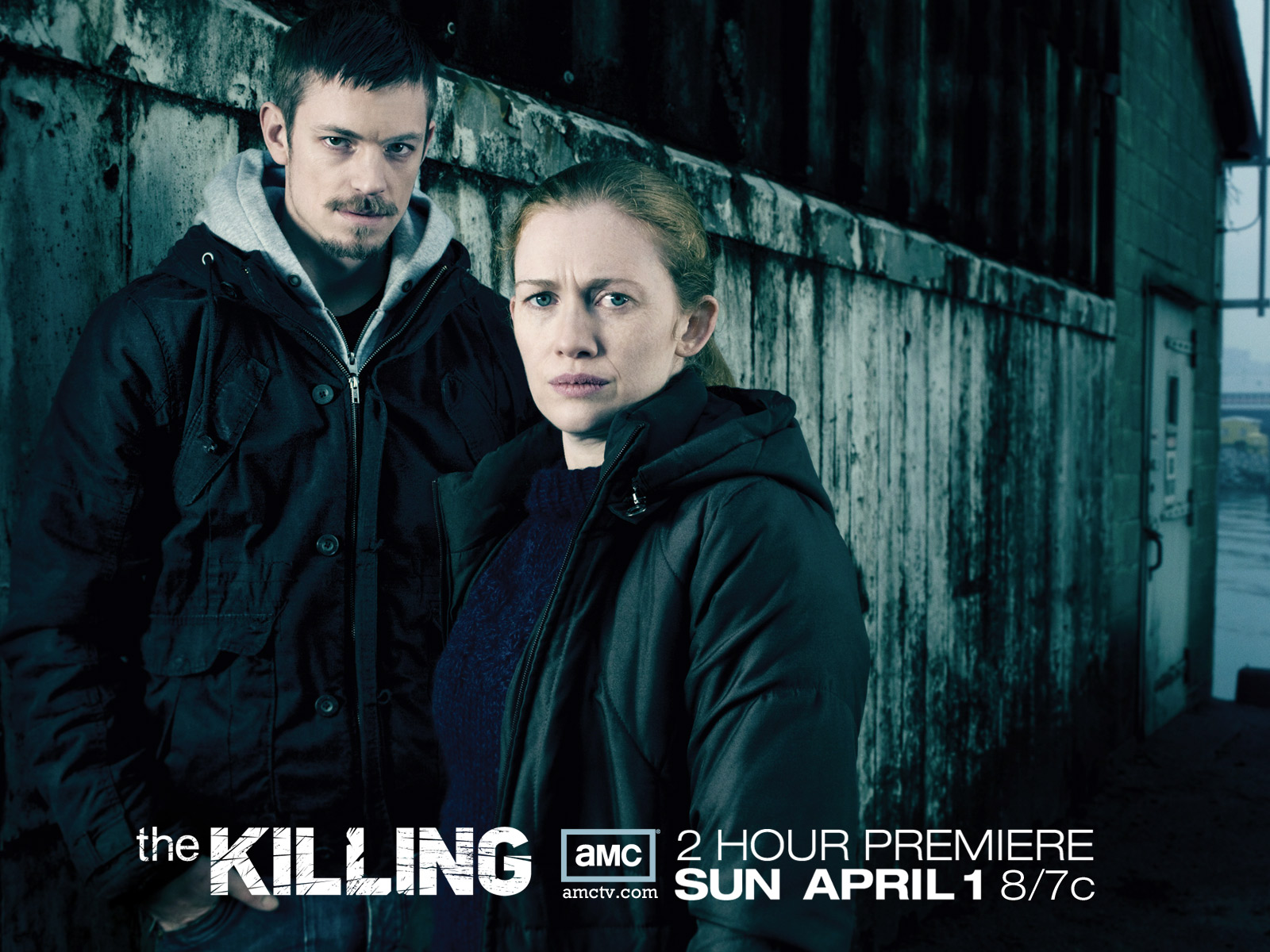
The online service Netflix started streaming all 4 series of "The Killing", including the final 4 episodes. The sinister detective series (adapted and Americanized from the Danish crime show, "Forbrydelsen") was endangered (wikipedia). The complicated, twisted and dark plot didn´t find much love from the TV audience, at least  from the majority. Maybe "The Killing" was too ambitious for the average TV watcher. Falling ratings induced AMC, the producer, to cancel the show after the 2nd season. But production resurrected because the TV channel Fox together with Netflix showed some interest, and the online company invested some money into the show. Ratings stayed bad and AMC killed "The Killing" on their network after series 3. Then Netflix approached as the savior of the quality show and produced series 4 with the final  episodes.

This is not surprising. Netflix, and the Internet in general, reaches a much larger audience than any TV channel can do. While the TV networks usually focus on the majority which has rarely a good taste (selfies, cat & dog videos!) Internet producers can afford to produce quality programs for minorities. Helpful is the fact the Internet shows can be down streamed 24/7 and are therefore more comfortable to consume.

Internet also raises competition (driveby). Traditional producers of quality TV like HBO, AMC, FX and others are getting more and more challenged by Netflix, Amazon.com and other online content providers who produce their own shows like "House of Cards". Competition is always good for consumers because producers have to be better than their competitors or at least as good as them to stay in business.

I think we can expect more quality TV like "The Killing" on Netflix, Amazon and other Online networks in the coming years. Enjoy.

Tuesday, August 5, 2014

Books: Tatjana - By Martin Cruz Smith


(Drivebycuriosity) - Russia is in a limbo. The Communist dictatorship of the Soviet Union has officially ended, but a modern democracy has yet to arrive. Today the Russians have few human rights but lots of bureaucracy, corruption & criminality. The defective novel "Tatjana " by Martin Cruz Smith is set in this mess (amazon).

The book is a part of Smith´s Arkady Renko detective series which started with the acclaimed novel "Gorky Park".  Now the Moscow criminal investigator Renko inquires into the death of  journalist "Tatjana", which is officially declared as a suicide. Reno has to deal with the mafia, corrupt colleagues, willful friends and the problems of modern Russia.

it is a slow story. Martin Cruz Smith is more interested in the political, sociologic and psychology aspects than in action. He spiced the novel with bitter & cynical remarks and with a pinch of dark humor. So "Tajana" resembles more the novels of Patricia Highsmith than the thrillers of Raymond Chandler, and there is even a touch of Donna Tart`s "Goldfinch" in it.

If you want a glance of today´s Russia in the shape of a psychological detective story,  "Tatjana" could be the right book for you.

Sunday, August 3, 2014

Stock Market: A King For A Day……..

(Drivebycuriosity) - It looks like the US stock market got the correction that many were praying for. Last week the US stock market (S&P 500) dropped 2.2%, bank stocks (minus 3.4%) and the transport sector (minus 3.7%)  lost even more (thereformedbroker). It seems that a handful of players took some money from the table.

Winners were the bears, notorious crash callers, short sellers and those who prefer cash and bonds to stocks. But I believe that - even if stock prices will fall deeper in the coming days - the gains of the bears will be short lived; as in the other corrections since the start of this bull market in spring 2009.

The current situation on the stock market reminds me of an old saying:"A king for a day, a fool for a life". Those who bet continuously on falling stocks may be right sometimes for a short time, but they are loosing in the long run. Since the start of the last century the  US stock market gained around 7% on average annually. Those who had reinvested the dividends reached an annually average return of around 9%.


I further assume that the bull market will continue in the coming years:

1. The current earnings season shows again that company profits are climbing faster than the analysts expect. Earnings are boosted by the advance of the global economy and by efficiency gains thanks to automation & Internet.

2. We experience a deluge of mergers & acquisitions, a sign that the CEOs are optimistic. They trust in the global economic growth and consider stocks (of many companies) still as reasonable priced or even as cheap.

3. Companies are sitting high cash piles. This leads to a flood of share buy backs and dividend hikes. Both developments make stocks more attractive.


 4. The majority, including many fund managers, is still too pessimistic, even more after the recent setback. The majority is underestimating the strength of the global economy and the health of the US companies. Many missed the rally since spring 2009 and are still sitting on huge cash reserves. Many are betting on a crash - or at least on a serious correction. For all of them the pressure is rising.

5. Interest rates are still extremely low because central bankers don´t want to risk an economical setback and inflation rates are constraint.

6. The US economy is stronger than many think and seems to accelerate as the recent purchasing manager indices show. In the second half of the year the US economy could get get some tailwinds from China which looks stronger than some months before and the healing process of Europe.

Saturday, August 2, 2014

Contemporary Art: Visiting The Art Institute Chicago


(Drivebycuriosity) - Chicago has 2 awesome museums: The Art Institute Chicago and the Museum of Contemporary Art. Recently - as my wife and I revisited the midwestern metropolis - we went to the Art Institute again which we have seen last year (driveby). This time we focused on their  amazing collection of contemporary art past 1965 (artic).


My favorite of the represented artists there is Gerhard Richter, who has a room for his own. There you can see why the German painter is the highest valued living artist as measured against the auctions revenus  of his works (wikipedia). His paintings combine imagination with superb technical qualities. His art "ranges freely over an astonishing variety of seemingly contradictory modes and genres" report the curators of this exhibition.


His "Woman Descending the Staircase" (Oil on canvas) looks from far like a photography, but when you come closer you can see the delicate brush strokes. The painting, created 1965, belongs to the artist`s early works when he enlarged and transferred photographs such as personal snapshots or images drawn from newspapers and magazines. He then blurred the images by dragging a dry brush over wet pigment.


Richter`s paintings "Flowers", "Two Candles" and "Little Landscape at the Seascape" (all oil on canvas) - shown above - are also a result of this technique.

The "Mouth" (Oil on canvas), which looks less natural, gives a glimpse on Richter´s imagination. The painting, one of the artist´s earliest surving canvases (early 1960s), is derived from an image of the French actress Brigitte Bardot. It looks like as she wants to suck you in.


Above you can see Richter`s "Ice" ("Eis") 1,2,3 & 4. In each of his four paintings the artist built up the surface with multiple layers of paint, laid on with alternating horizontal and vertical strokes (pulls) of a scraper. Each pull added a film of pigment but in places also dragged up one or more underlying layers. Richter himself had characterized his abstract paintings as constructions rather as expressions.


Besides Richter you can find a lot of gorgeous works from other important artists there:


            Fethististic Fragmentation


Christina Ramberg (1946-19959) was part of the Chicago Imagists. Her paintings frequently present the female figure in pieces. The visual impact of her fethististic fragmentation of the body`s heigthened through a meticulous attention to the painted surface. Above you can see  "Loose Beauty" (Acrylic on board) The painting displays "the textual interplay between the figure`s smooth flesh and alternately slick and scalloped undergarments that calls attention to a duality of pleasurable sensuality and disciplining constraints", comment the curators.


Philip Guston`s paintings are influenced by comic strips, politics and his personal problems. Above you can see "Green Sea" and "Red Box" (Oil on canvas). In "Red Box" an outstretched arm drives the last nail into Guston´s own imagined coffin. Sounds  depressive and grizzly, but looks funny, anyway. Maybe the artist made fun of his own depressions, a kind of autotherapy.


Jim Dine`s work, "Green Suit" (Corduroy suit, corrugated cupboard, wire and oil paint) reminds me a bit of the German artist Josepf Beus who created a famous sleaze suit. For creating this art work the performance artist used clothing taken from his own closet. I am not sure if Dine used this suit for his own performance events and happenings.


Robert Rauschenberg is famous as co-founder of pop-art. His "Persimmon" (Oil paint and silkscreen ink on canvas) is a kind of detour into the renaissance, maybe he wanted to show his classical skills and his knowledge. Anyway, the painting above combines objects - dishes and fruit - with a detail from Peter Paul Ruben`s "Venus in front of the Mirror" from 1613/14.


Ed Ruscha, the creator of the painting "City" (Oil on canvas), shows an interest in the visual and conceptual tensions between text and image. The image above is part of a series of "liquid" or "wet" word paintings, in which the linguistic effect is made more palpable by the trompe l'oeil renderings of the words, which suggests that they have been created from water, oil, syrup or another fluid.


Vija Celmins` "Explosion at Sea" (Oil on canvas) is one of these paintings which can be confused with a photography on the first view. I am impressed by the technical skills this picture reveals. Celmins used photographs from books, magazines and newspapers found at secondhand stores and yard sales as departure of her work. The painting aboves shows a detailed image of an attack on an aircraft carrier.


Lee Bontecou uses waste as base for her works like used conveyor belts discarded by a neighboring laundry. Above you can see "Untitled" (Steel, canvas, and copper wire) where fragments of natural canvas and burlap are tautly stretched and attached with wire to an armature and welded frameworks. Every elements seems directed toward the deep, velvet-lined opening - a mysterious hole. You can speculate what you see: Is it a bizarre crater in Siberia, a black hole ore something anal, like a human sphincter?


                          Hidden Realities


 Glady Nilson`s, The Trogens (Acrylic on plexiglas) shows the artist´s interest in the themes of hidden realities. The painting above recalls the iconic story of the Trojan Horse from Homer`s "The Odissey", suggesting that artifice can belie true meaning and that things are not always as they appear.


Jo Baer composed her work "Memorial for an Art World Body (Nevermore)" (Oil on canvas) after her own biography. She layered preexisting imagery to map her own life´s cycle. The starry backround depicts the constellations visible visible in the sky at the moment of her birth. The central figure of the artist as a young woman derives from a snapshot taken by an admirer. The stiff figures standing in rows were reclaimed from paintings of Baer by her ex-husband John Wesley, a pop artist, who despicted her as kourai, ancient Greek statuary. These idealized images of Baer in her youth are countered by the potrayal of her as an ominous bird, taken from a painting by Bruce Robbins, and of ravens peering over a golden Egyptian sarcophagus. She must loved herself very much, but I think the picture has its charm anyway.


I think Sylvia Plimack Mangold`s "In Memory of My Father "(Acrylic on canvas)  is somewhat funny. Maybe the artist had a very austere and meticulous parent whom she wanted to erect a memorial. Btw. the measurement stick in the painting above stops on the right edge of the canvas at 66 3/4 inches, which correspondents to the age of the artist`s father upon his death.


Ellsworth Kelly aimed to investigate "how things look". His work "emphazise pure line, form and color and his abstraction is rooted in observed visual phenomena in natural and manmade enviroments" say the curators. Here you can see his painting "Black and White" (Oil on canvas).


Roy Lichtenstein is famous for his cartoon like paintings, the so-called pop art. It looks like that he made sometimes fun of his artist colleagues who focused on abstract and expressionistic pictures as his "Brushstroke with Spatter"(Oil and magna on canvas) above this paragraph shows.


The Art Institute has "an" Andy Warhol, of course. This iconic artist employed a lot of busy technicians, his famous "Factory", which produced tons of art work which is now spreaded all over the world. His "Mao" (Synthetic polymer paint and silk screen ink on canvas) - who fills a whole wall - is really impressive. But - this huge Mao portrait raises the question: How come a dictator and murderer of millions of people still has the status as a pop icon? Maybe his victims don´t have a powerful lobby?


Elizabeth Murray´s work playes with influences by Cubism, Abstract Expressionism and comic art. Her you can see her "Back on Earth" (Oil on two canvases).


Unfortunately my point-and-shoot camera doesn´t capture the paintings very acurately; they are just proxies. If you like the pictures, you might visit the Art Institute by yourself.

Enjoy!