Sunday, June 27, 2021

Books: Newton`s Dark Matter


(Drivebycuriosity) - Isaac Newton, who lived from 1642 through 1727, had a great influence on the advance of scientific thinking and inspired many authors. Philip Kerr, the writer of many popular books, wrote a crime mystery novel around the great thinker, called "Dark Matter: The Private Life of Sir Isaac Newton: A Novel" (amazon ). Maybe the marketing department of his publisher coined the unfortunate title, there is not much about "dark matter" or the private life of Newton. 

 The novel is written in first person and claims to be the report of Christopher Ellis, who indeed had worked with Newton for some time, when the scientist was the Warden of the Royal Mint, which controlled the English money supply. The plot focuses on a series of murders which are not only unfortunate for the victims, they are also challenging the Royal Mint and so England`s economy during one of so many wars with France (this is a spoiler free blog).

"Dark Matter" is written in the style and grammar of this time, like an authentic report. Apparently the author was inspired by the much better diaries of Samuel Pepys, who appears in the story ( wikipedia). Newton is represented as a kind of Sherlock Holmes, who uses his scientific & analytical skills. Kerr`s Christopher Ellis adds some cloak-and-dagger adventures and a bit explicit sex. Anyway, I found the book increasingly tedious and unbelievable. Newton deserves better.


Friday, June 25, 2021

Contemporary Art: Transmogrified @ Richard Taittinger Gallery


(Drivebycuriosity) - Normality is back, thanks to Moderna and others vaccines. My wife and I are visiting art galleries again. This week I saw an exhibtion @ Richard Taittinger Gallery on Manhattan`s Lower East Side. 


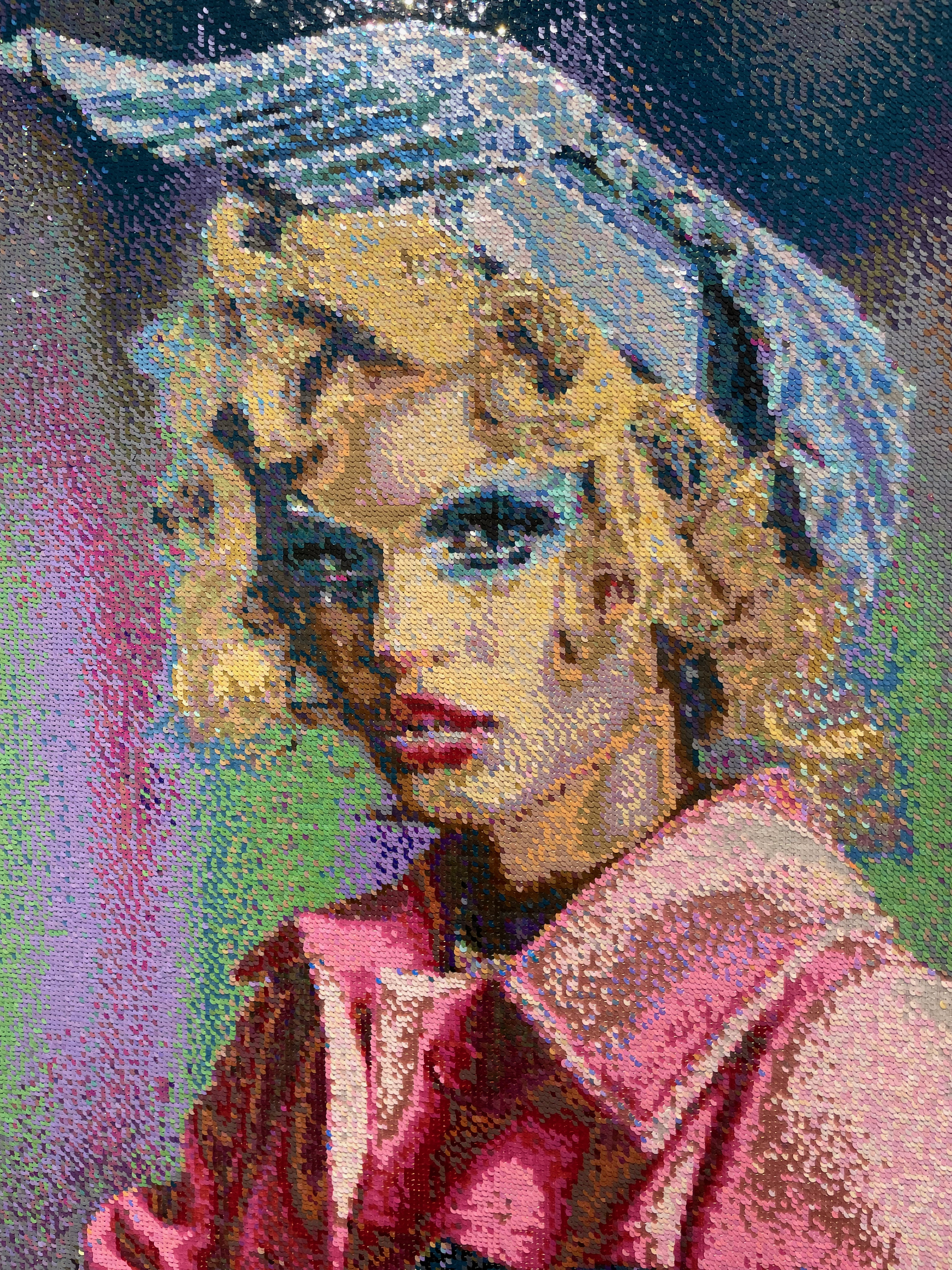
The art dealer displayed work by South African artist Frances Goodman ( richardtaittinger). The show was called "Transmogrified". The exhibition contains a series of sequin paintings the artist did during the 2020 lockdown based on social media platforms.


On top of this post you can see the painting "Girl in the Pearl Necklaces", 2021, Hand-stitched sequines on canvas;

followed by "Dressed for a Cold Day Out", also 2021, Hand-stitched sequines on canvas;


Above this paragraph follows "Extra"


Above this paragraph you can see "Big Eyes" followed by "Queen".


Above  "Flaming Lips"


 Above the sculpture "Pink Proboscis", 2021, Acrylic nails, foam, fiberglass, and silicone;

followed by "Super Mailficence", 2021, Foam. wire, fiberglass, acrylic nails, silicone.


To be continued

Tuesday, June 22, 2021

Economics: Bitcoin Is A Toy And Not A Currency


(Drivebycuriosity) - There is a lot ado around Bitcoin. This is "a decentralized digital currency, without a central bank or single administrator", says Wikipedia (wikipedia). Many other also call Bitcoin a currency, which would make it comparable to the US Dollar, the Euro and other currencies.,

This morning the price of Bitcoin dropped  8% and continued the sharp fall of the recent days ( cnbc). The price of Bitcoin had quadrupled from November 2020 through May and then had given up half of the gains.  


 (source )

The wild fluctuations show that Bitcoin is not a currency:

1. Paying with Bitcoin is a game of chance because of the wild fluctuations. Tomorrow`s value of any payment could be much higher or lower than expected. Neither seller or buyer could calculate the transaction.

If a company would mark their prices in Bitcoin they would lose their customers when a sharp Bitcoin rally makes their goods & services too expensive or they would suffer high losses when a Bitcom crash makes them too cheap.

If someone borrows Bitcom he could go bust because his debt could explode when the Bitcoin price jumps, lenders fear the risk of a sudden Bitcoin crash.

The extreme fluctuations would make accounting and business plans senseless. 

2. Bitcoin is popular because its supply is limited like Picasso paintings. According to Wikipedia new Bitcoins are created at an ever-decreasing rate (wikipedia). The total number of Bitcoins is capped at 21 million.

But this restriction also an obstacle on the way to the use as a currency. In the 1940's, Milton Friedman recommended a fixed money supply, the idea that the money volume should be kept at a certain volume. Later he abandoned this proposal. He realized that a growing economy, say with a rate of 2% annually, needs a growing money supply. The money volume has to grow at least with the same rate as the economy to finance the growth. Otherwise prices - including wages - would have to fall, in this example around 2% annually. Friedman acknowledged that generally falling prices could lead to a severe depression. Therefore the limited supply of Bitcoins would not satisfy economic growth.

Because of these problems it is highly unlikely that many people use Bitcoin as a currency, say for payments, calculating prices of goods & services, and denominating loans. Today there is already a strong competition between alternative currencies like US Dollar, Euro, Chinese Yuan, British Pound (Pound Sterling), Swiss Franc and more. Each of these currencies represents an economy and it is much more reliable for economic calculations & transactions than Bitcoin.


Conclusion: Bitcoin is cool because it is a very geeky Internet gadget. The wild price fluctuations invite gamblers to play with it. But it is not a currency and will never be.

Thursday, June 17, 2021

Books: Palm Beach Finland By Antti Tuomainen


(Drivebycuriosity) - Does Finland have palm beaches? According to a novel by Antti Tuomainen yes, even though the water is near freezing temperature and the palms are just plastic ( amazon). The plot is set on a remote beach resort somewhere on Finland`s coast. Some morons start accidentally an evil chain reaction which attracts an undercover cop and a ruthless killer (this is a spoiler free blog).

"Palm Beach" reads like absurd theater turned into a Hitchcock movie spiced with a dark humor and some slapstick. It is a comedy blended with thriller elements and some hilarious gore. The characters are driven by a lot overconfidence in themselves (perfectly described be the German term "Selbstüberschätzung") with fatal consequences. Tuomainen describes masterly how human weaknesses, especially in the evaluation of other persons, lead to a lot of harm. The plot is flavored with some unlikely romantics and a very special elaborately described sex scene. Priceless!

Tuomainen is an underrated author and the book is a gem of the dark thriller genre. In the moment of writing the Kindle version cost just 99 cents.


Tuesday, June 15, 2021

Contemporary Art: The Magic Of Mirrors


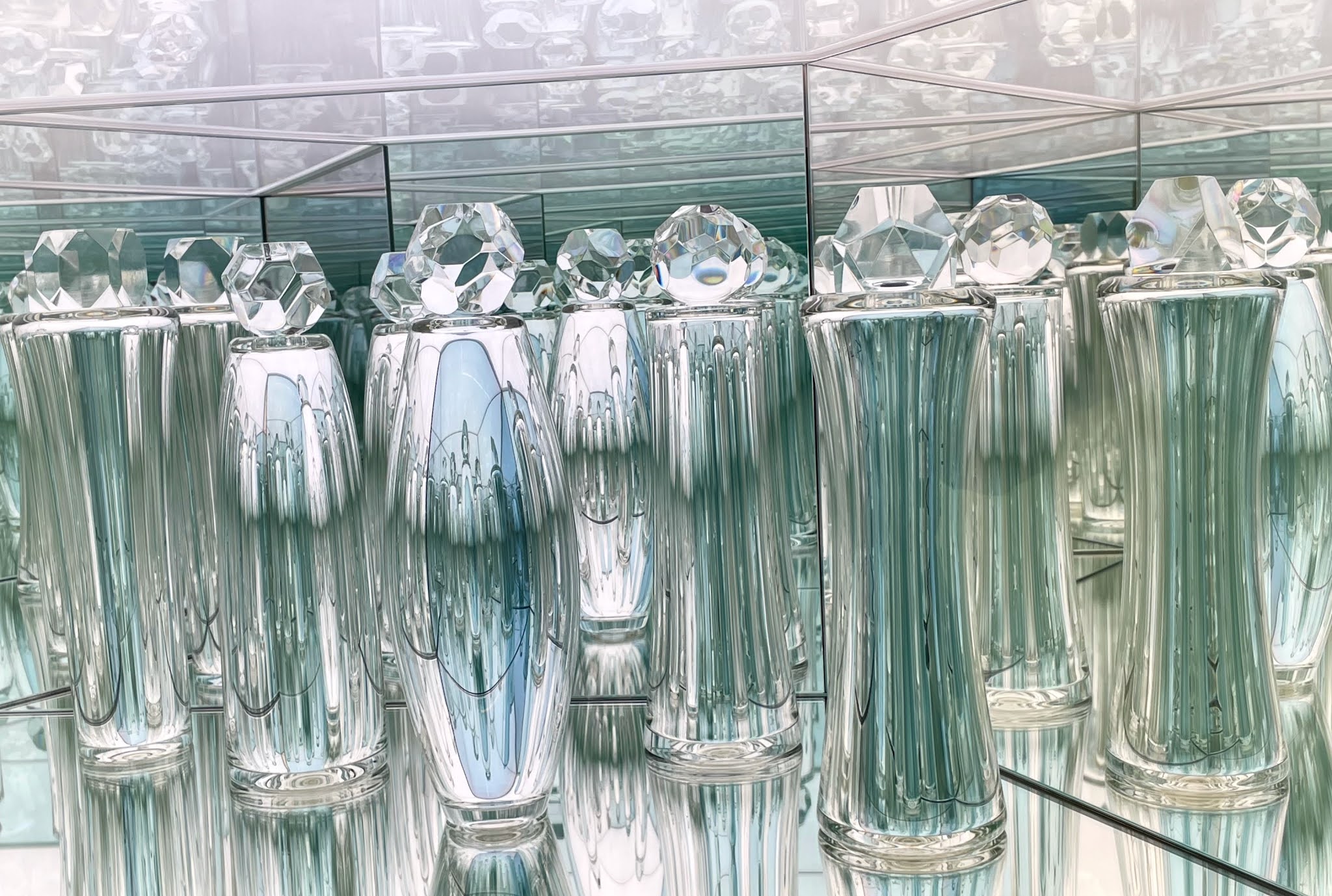
 (Drivebycuriosity) - Mirrors can create amazing effects. I saw this again in an exhibition @ gallery James Cohan on Manhattan´s Grand Street. They had a show with works by Josiah McElheny ( jamescohan). The show was called "Libraries", which is a reference to Jorge Luis Borges` famous short story "The Library of Babel".


The press release explains, " for this exhibition, McElheny has altered the existing architecture of the Lower East Side gallery to echo the hexagonal structures described by Borges. Installed across the walls within the space are six elegant, glazed wood frames that each provide a window into interior, mirrored spaces that create an effect of limitless expansiveness “behind and beyond” the surface of the wall"


To be continued


Friday, June 11, 2021

Science Fiction: A Look @ Contemporary Space Operas


 (Drivebycuriosity) - Space operas are an amazing genre. There are no limits for the imagination of the author. The compilation "The 2020 Look At Space Opera Book" curated by Allan Kaster presents some contemporary versions ( amazon).  The anthology contains 20 short stories and novellas. 

 These are my favorites: 

 "By the Warmth of Their Calculus,” by Tobias S. Buckell. Mother Superior Koki-Fiana fe Sese, the captain of a space ship,  has big problems. Sudden and unexpected changes endanger her ship and the lives of her crew. She has to find out what caused these dangers and how to deal with that. The plot is spiced with fascinating idiosyncratic ideas. A major part of the story is the weird spaceship and the peculiar technology which makes her functioning. Pure cutting-edge hard science fiction.

 
"Boojum" by Elizabeth Bear & Sarah Monette. The plot follows the crew of an organic space ship, called "Bojum". They live inside a huge semi-intelligent being which lives and travels in the vacuum of space. 

The Days Between,” by Allen M. Steele. A man suddenly wakes up from hibernation aboard a spaceship in deep space and finds himself alone. He - like the rest of the passengers - should have been woken more than 100 years later when the spaceship reaches the target planet. What will he do? A kind of modern Robinson Crusoe story.

  “Bright Red Star,” by Bud Sparhawk. Modified combat troops are searching for settlers on a planet which is attacked by hostile aliens. The description of the aliens and their war strategies are scary.

Unfortunately the curator used a very broad definition of space operas and included many fairy tales and similar fantasy stories which don´t have much to do with space travel, on the other hand he missed strong 21. century space operas like "Night Passage" by Alastair Reynold & "The Wordless" by Indrapramit Das. Both are reprinted in "The Year`s Best Science Fiction" edited by Gardner Dozois, Thirty-Fifth Annual Collection" ( amazon my review). I also missed "Winning Peace" by Paul J. McAuley, reprinted in The New Space Opera, edited by Gardner Dozois & Jonathan Strathan (amazon my review).  And Yoon Ha Lee`s short story “The Dragons Gate” ( amazon) is much better than the included story "Extracurricular Activities".  

Maybe there were some copy right issues and the curator could not - or did not want to - include stories which already have been reprinted in other anthologies. Anyway, the collection is full of exotic & bizarre ideas and in the moment of writing the Kindle version cost just $6.99 - so the book is still a bargain.

PS On top of this post you can see art work by Angus McKie.
 

Economics: Did The Decline Of Coal Cause The Fall Of The British Labour Party?


(Drivebycuriosity) -  Recently I discovered a fascinating chart (   source ). The graphic above shows the decline of coal as source of electric energy in the UK. In the begin of the 20th century, Great Britain`s electricity was almost completely generated by burning coal; today the black mineral almost disappeared as source of energy.

The decline of coal has caused the decline of the union of coal miners, which once had been very powerful. UK`s dependence on coal made the country very vulnerable. In the 1970s & 1980 the coal miners abused their monopoly power (as energy producers) and they took the whole country hostage. They called frequently strikes to enforce salary hikes and other demands which brought coal mining to temporary still stands ( wikipedia). 

The halt of coal mining in winter 1984-85 shut down electricity production (which depended around 60% on coal). This caused a still stand of manufacturing and many households and offices were running out of heating material in the middle of the winter. The frequent strikes hampered economic growth, heated inflation and the whole country fell into a crisis. 

The decline of the coal miner union went along with the fall of the British Labour Party (wikipedia ). The left-wing party ruled UK in the 1950s, 60s & 1970s, today they are second. Is this just a coincidence? Did coal´s decline cause the weakening of the Labour Party? Or did the decline of Larbour cause the decline of coal? 

It seems that both declines where supporting each other. In the 20th century - till the 1980s - the strong unions - including the coal miners - and the votes of their members supported the Labour Party. Here a quote from Wikipedia: "Coal miners' politics, while complex, have occasionally been radical, with a frequent leaning towards far-left political views. A number of far-left political movements have had the support of both coal miners themselves and their trade unions, particularly in Great Britain." ( wikipedia )  

Since the 1980s the shrinking power and membership of the coal miners union  reduced the support for the Labour Party. Today there are not many coal miners who could vote for Labour. I am aware that there are many other and complicated causes for Labour`s decrease but I think the decline of coal also cost Labour important percent points at the elections.

Otherwise political changes in the UK also reduced the role of coal. The Conservative Party gave less support for a very dirty energy source and is less inclined to kowtow to the blackmailing by the coal workers union. Coal won`t come back, will Labour?